
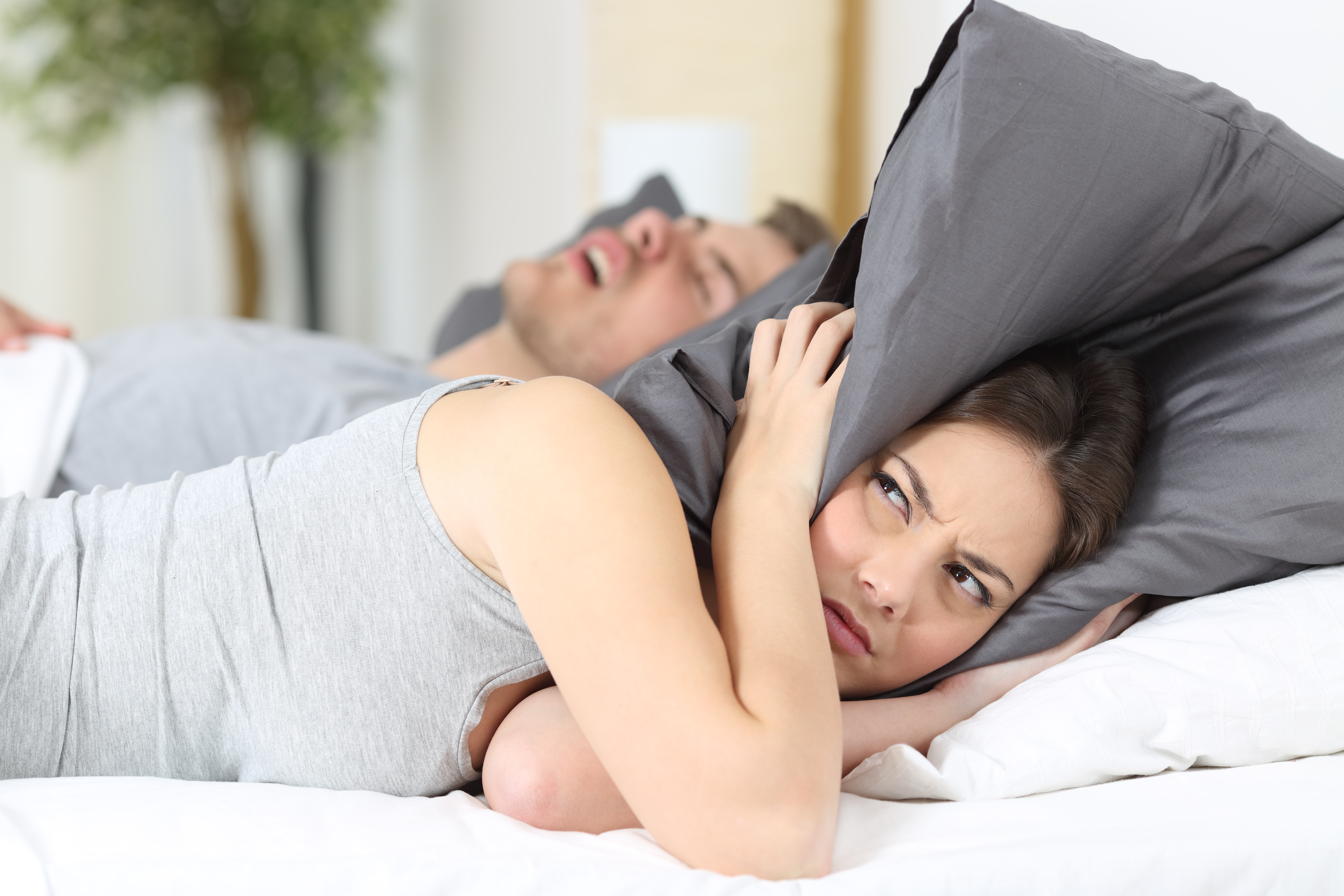
William Howard Taft, 27th president of the United States, had a reputation for intelligence and keen political judgment in his early political career. However, his presidency was marred by so many poor decisions and political errors that he earned the nicknames “Mr. Malaprop” and “Taft the Blunderer.” In addition to often appearing “foggy” or “bewildered,” Taft was notorious for falling asleep at the wrong times: during meetings, while signing important documents, mid-conversation, at the dinner table—even while standing up. This portly president, who ballooned up to well over 300 pounds, also snored like a freight train and often had trouble being awakened. Historians agree that William Howard Taft suffered from severe sleep apnea.
Snoring: Mere Nuisance or Disease?
Apnea means “no breath,” and obstructive sleep apnea is the periodic cessation of breathing while asleep. It is caused by partial or complete blockage of the airway by the tissues in the back of the throat. Oxygen levels in the blood drop and carbon dioxide rises, waking you up just enough to start breathing.
It’s no wonder that people who suffer with this disorder get sleepy during the day. This continuous arousal prevents them from getting enough of adequate rapid eye movement (REM) sleep, the deepest level of sleep. Sleepy drivers cause more than 72,000 automobile accidents every year, and many of them have untreated sleep apnea. Work performance, mood, quality of life: Everything suffers when you’re sleepy all the time.
Beyond Sleepiness
Hundreds of scientific studies have confirmed just how devastating sleep apnea can be. The combination of deprivation of REM sleep plus other ill effects of sleep apnea, such as significant drops in oxygen levels in the blood, fluctuations in hormone levels, and elevations in blood pressure, heart rate, and cardiac output wreak havoc on the body.
People with sleep apnea are at increased risk of hypertension—and not only at night. According to a landmark study of 709 patients published in the New England Journal of Medicine, those with moderate episodes of apnea had three times the risk of developing high blood pressure as those without this sleep problem.
Sleep apnea is also an independent risk factor for coronary artery disease and stroke. These conditions are associated with increased levels of oxidative stress, C-reactive protein (a marker of inflammation), and clotting factors, and all of these are elevated in people with sleep apnea. Cardiac arrhythmias and congestive heart failure are also much more common among sleep apnea sufferers.
In addition, there is a significant relationship between sleep apnea, elevated blood sugar and insulin, and insulin resistance. Severe sleep apnea confers a five-fold increased risk of diabetes. Obesity, a related condition, is also associated with sleep apnea, although the exact relationship is harder to figure out since obesity is a primary cause of sleep apnea as well. Erectile problems, immune dysfunction, memory loss and concentration difficulties…the list of problems associated with sleep apnea goes on and on.
Sleep Apnea Treatments
My interest in sleep apnea is more than passing, because I have it myself. I used to be a major league snorer and was once recorded during a sleep study as having 69 apnea episodes in one hour and no REM sleep. I started using a continuous positive airway pressure (CPAP) machine several years ago. It blows pressurized air into my airway via a small mask I wear over my nose and prevents the soft tissues in the throat from collapsing.
I can honestly tell you that it has changed my life. I wake up feeling rested, and charge through the day without getting tired or sleepy. Of course, it took a little getting used to, but now I’m so attached to my CPAP that I never travel without it. And my wife likes its effects almost as much as I do.
Although CPAP and APAP (automatic positive airway pressure) machines are the Cadillacs of sleep apnea treatments, they are not the only ones out there. Some people have success with dental appliances that increase the diameter of the airway by bringing the jaw slightly forward, or prevent the tongue from relaxing back into the airway. Others do well by simply breathing oxygen through a nasal tube at night. Still others turn to surgery, but I would consider that a last resort.
Lose Weight, Say Goodbye to Sleep Apnea
Almost everyone with sleep apnea will benefit from losing weight. In fact, adequate weight loss will completely eliminate sleep apnea in many, and losing 20 to 30 pounds will result in significant improvements. (President Taft, by the way, lost 80 pounds after he left office. His uncontrollable sleepiness disappeared, his blood pressure dropped, and during his latter years, he got high marks as Chief Justice of the US Supreme Court.)
Avoiding alcohol may also be helpful. This is especially true for individuals with mild cases, who may snore and have episodes of apnea only after having a drink. Taking sedatives or analgesics at bedtime can have similar effects, so getting off such drugs may help.
The Medicalization of Sleep Apnea
Figuring out whether or not a person has sleep apnea is not rocket science. I could diagnose you with 90 percent accuracy over the telephone simply by asking a few questions. Have you been told that you snore frequently? Stop breathing, snort, or gasp for air? Jump, jerk, or twitch during sleep? Do you feel sleepy during the day? Do you fall asleep while reading, watching TV, or doing other activities?
Yet for a condition that is easily diagnosed and treatable, it often goes undiagnosed and untreated. According to a study published in JAMA, one in five adults has some degree of sleep apnea, and it’s at least moderately severe in one in 15. Yet 80 to 90 percent of them are untreated.
I attribute most of this to the “medicalization” of sleep apnea. Conventional medicine requires a formal workup prior to prescribing CPAP, APAP, or another therapy. An unattended sleep study, which costs a few hundred dollars and is done at home, involves wearing sensors overnight that measure airflow, respiratory effort, and oxygen levels in the blood. A $1,000 to $3,000 polysomnogram is a more comprehensive workup that necessitates spending a night in a sleep clinic, hooked up to all kinds of sensors that monitor brain waves, heart rate, breathing, muscle activity, eye movements, and blood oxygen levels. Then and only then will treatment be prescribed.
This is absurd—and it’s hurting people. You can buy Sominex, Nytol, melatonin, and other sleep aids over the counter. Why not CPAP machines?
It’s a Turf Battle
The party line from the sleep specialists, who aren’t about to give up their turf, is that these “medical devices” require special settings that can only be determined by trained professionals. Well, auto-adjust positive airway pressure machines have been available for well over a decade. Although they are no more effective than traditional CPAP machines in treating sleep apnea, they allow patients to forego expensive sleep tests and go straight for the therapy.
One of my patients did just that. After I told him that I suspected sleep apnea, he bought a regular CPAP machine on e-Bay for $300 (new ones cost $1,500–$2,500). He set it at the average setting, and has been using it successfully ever since.
Sleep Apnea Solutions Recap
If you suspect you might have sleep apnea, you probably do. Get it checked out as soon as possible. If you’d like to undergo an inexpensive screening at Whitaker Wellness, call (866) 944-8253. For even more information on sleep apnea, visit the American Sleep Apnea Association at sleepapnea.org.
